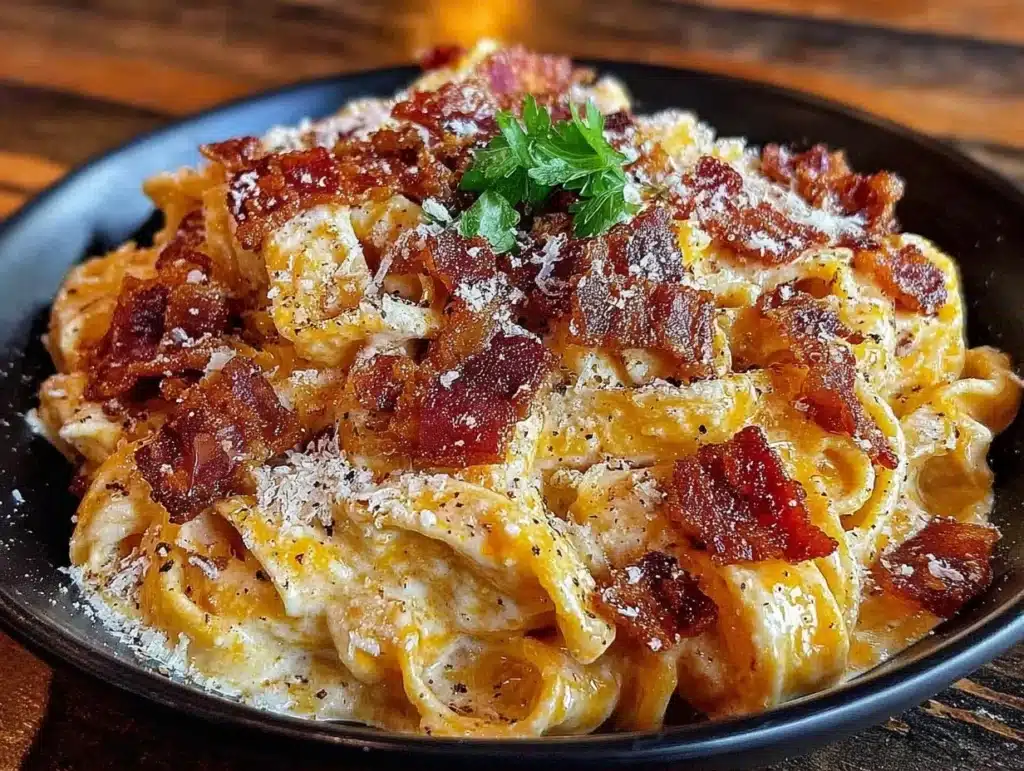
There is a specific sound that pasta makes when it hits the pan just right—a sizzle that promises comfort before you even take the first bite. For me, that sound is the soundtrack to my best memories of Italian dining, but also my biggest kitchen failures. I remember the first time I tried to make carbonara in a cramped apartment kitchen. I thought “creamy” meant dumping heavy cream into the pan. It was a mistake I made so often that my friends eventually stopped asking me to host dinner parties, mostly out of pity for their digestive systems.
Let’s face it, traditional carbonara is supposed to be silky, not soupy or rubbery. The secret isn’t cream, but it is technique. This creamy bacon carbonara pasta recipe is my redemption arc. I spent years perfecting the emulsion, testing different cheeses, and learning exactly how to temper the eggs without scrambling them into an omelet. The result is a dish that feels indulgent yet balanced, rich but not heavy.
You know how some meals just feel like a hug? This is that meal. It’s perfect for busy weeknights when you want restaurant-quality food without the wait. I’ve tested this recipe over a dozen times, tweaking the ratio of guanciale to pancetta and finding the sweet spot for pasta water starchiness. It’s reliable, it’s forgiving, and honestly, it’s the best thing you’ll make all week. If you’re tired of shortcuts that taste like grease and regret, this is the sauce built the way it’s supposed to be.
Why You’ll Love This Recipe
After countless iterations in my kitchen, I can tell you with confidence that this isn’t just another version of carbonara—it’s the definitive one. Most online recipes skip the crucial step of building a proper emulsion, resulting in a dish that separates on the plate. This method ensures every strand of pasta is coated in a glossy, velvety sauce that clings to the noodle rather than pooling at the bottom of the bowl.
- Quick & Easy: Despite the technique, this comes together in under 30 minutes. It’s perfect for busy weeknights or when you need a quick, impressive meal.
- Simple Ingredients: You likely have everything in your kitchen already. No fancy grocery trips needed, just good eggs, sharp cheese, and quality pork.
- Crowd-Pleaser: This recipe always gets rave reviews. Even my pickiest eater friends go back for seconds, which is rare for dinner parties.
- Unbelievably Delicious: The texture is next-level. It’s creamy without being cloying, savory without being salty, and deeply satisfying.
- Restaurant Quality: I’ve had this dish in high-end Roman trattorias that didn’t taste as good as this home-cooked version. It’s comfort food reimagined for the modern kitchen.
What makes this recipe different is the attention to the emulsion. By whisking the cheese and eggs with a splash of hot pasta water before adding it to the pan, you create a stable, creamy sauce that never breaks. It’s a small step that makes a huge difference. This isn’t just good; it’s the kind of meal that makes you close your eyes after the first bite and forget about your stress for an hour. It’s soul-soothing satisfaction in a bowl.
What Ingredients You Will Need
This recipe relies on high-quality, simple ingredients to deliver bold flavor and satisfying texture. The magic happens in the balance between the fat from the pork, the starch from the pasta, and the sharpness of the cheese. Here is what you need to get started.
For the Pasta Base
- Spaghetti or Rigatoni: 400g (14 oz) of dried pasta. Spaghetti is traditional, but rigatoni holds the sauce better. Use a good brand like De Cecco or Rummo for the right texture.
- Water: Plenty of salted water for boiling. The water should taste like the sea.
For the Sauce & Pork
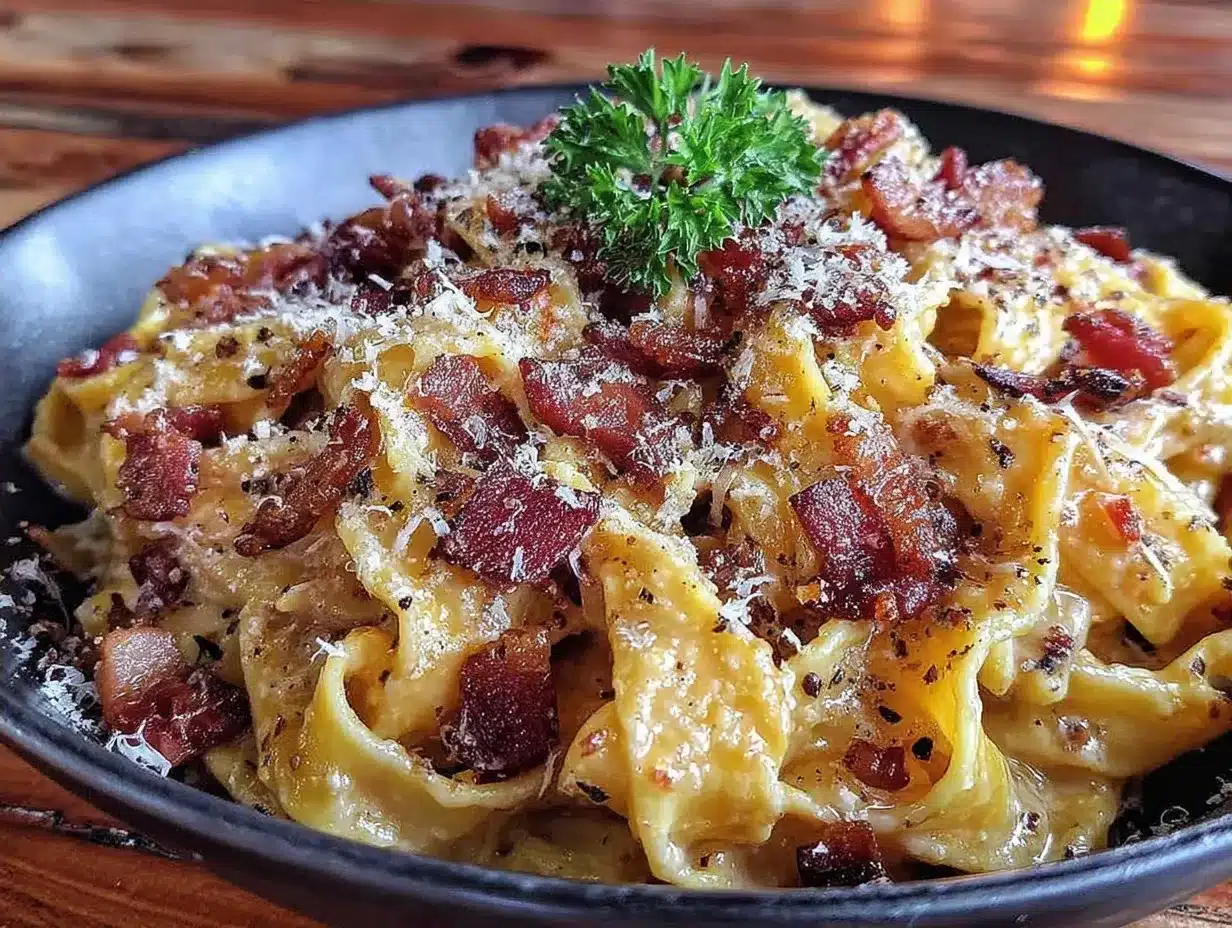
- Pancetta or Guanciale: 200g (7 oz), cut into small cubes or strips. Guanciale is authentic and has a richer flavor, but pancetta is easier to find and still delicious. I prefer pancetta for its consistent fat content.
- Eggs: 3 large egg yolks and 1 whole large egg. Using mostly yolks gives you that rich, yellow creaminess. Room temperature eggs emulsify better.
- Pecorino Romano: 100g (3.5 oz), finely grated. This sheep’s milk cheese is sharp and salty, essential for the authentic taste. You can mix in some Parmigiano Reggiano if you want it milder, but Pecorino is the star.
- Freshly Cracked Black Pepper: 1-2 teaspoons, freshly cracked. This isn’t a garnish; it’s a primary flavor. Use a pepper mill and grind it coarse.
- Pasta Water: Reserved starchy water from the boiling pot. This is the liquid gold that binds the sauce.
I recommend using a microplane for grating your cheese. It creates a fine powder that melts instantly into the sauce, preventing any clumpy bits. If you can’t find Pecorino Romano, a blend of 50% Pecorino and 50% Parmigiano works well, though the flavor will be less sharp. Avoid pre-grated cheese; the anti-caking agents will prevent proper melting.
Equipment Needed
You don’t need fancy gadgets, but having the right tools makes the difference between a messy kitchen and a smooth cook. A large skillet or a deep sauté pan is essential. It needs to be wide enough to toss the pasta and large enough to hold the sauce without spilling when you add the pasta water.
I use a stainless steel skillet because it retains heat well, but a non-stick pan works too if you’re careful with the temperature. A fine-mesh strainer is crucial for reserving pasta water without losing any noodles. A whisk is your best friend here; you need it to vigorously emulsify the egg and cheese mixture. Avoid using a fork for this step, as it won’t incorporate the ingredients smoothly. Finally, tongs are better than a spoon for tossing the pasta, ensuring every strand gets coated evenly.
Preparation Method
Ready to build the sauce? Let’s get cooking. This process is straightforward if you stay organized.
- Boil the Water: Bring a large pot of salted water to a rolling boil. Add the pasta and cook according to package directions, but aim for al dente (firm to the bite). You’ll need about 1 cup of pasta water, so reserve it before draining.
- Cook the Pork: While the pasta cooks, heat a large skillet over medium heat. Add the cubed pancetta or guanciale. Cook until the fat renders and the meat is crispy and golden brown, about 5-7 minutes. Do not add oil; the pork will release its own fat. Once crispy, remove the pork from the pan with a slotted spoon, leaving the rendered fat in the skillet.
- Make the Egg Mixture: In a medium bowl, whisk together the egg yolks, whole egg, and finely grated Pecorino Romano. Add a generous amount of freshly cracked black pepper. Whisk until you have a thick, smooth paste. This is your base.
- Temper the Eggs: This is the most critical step. Take a ladle of the hot pasta water and slowly drizzle it into the egg mixture while whisking constantly. This raises the temperature of the eggs gradually so they don’t scramble when they hit the hot pan. Whisk vigorously until combined.
- Combine: Turn off the heat under the skillet with the pork fat. Add the drained pasta to the skillet. Pour the egg and cheese mixture over the pasta, adding the crispy pork back in. Toss quickly and vigorously. The residual heat from the pasta and pan will cook the eggs gently, creating a creamy sauce. If it looks too thick, add more reserved pasta water, a splash at a time.
- Serve Immediately: Plate the pasta immediately while it’s hot. Top with extra black pepper and a few more shavings of cheese. Do not let it sit, or the sauce will continue to thicken and stick.
Cooking Tips & Techniques
The biggest mistake people make is adding the egg mixture to a hot pan. Never do this. Always turn off the heat before adding the eggs. The residual heat is enough to cook the eggs gently into a custard-like sauce. If your pan is still sizzling, wait a minute. I learned this the hard way after making my first batch of scrambled egg pasta.
Another key technique is the emulsion. When you toss the pasta with the egg mixture, keep moving it. Use your tongs to lift and fold the pasta. This mechanical action helps the fat and water bind together. If the sauce breaks or looks oily, you’ve added too much heat or not enough pasta water. Add a splash of hot water and keep tossing.
Don’t skimp on the black pepper. It’s not just for spice; it provides a peppery bite that cuts through the richness of the pork and cheese. Freshly cracked is non-negotiable. Pre-ground pepper lacks the aromatic oils that make this dish sing. Also, taste your cheese before adding salt. Pecorino is very salty, and the pancetta adds more. You probably won’t need any extra salt in the sauce.
Variations & Adaptations
While the classic version is hard to beat, there are ways to adapt this recipe to your tastes or dietary needs.
Chicken Carbonara: Swap the pancetta for diced chicken breast. Season the chicken with salt and pepper and cook it in the pan before rendering the fat. This adds protein and changes the texture slightly.
Vegetarian Option: Omit the pork and use a high-quality vegetable broth instead of pork fat for cooking the onions. Add sautéed mushrooms or spinach for umami and texture. The sauce remains creamy and delicious.
Gluten-Free: Use your favorite gluten-free pasta. Note that GF pasta can be starchier and softer, so rinse it less and reserve extra pasta water. The sauce may need a bit more liquid to coat the noodles properly.
Dairy-Free: This is trickier because cheese is central to the emulsion. Use a high-quality vegan parmesan and a splash of olive oil instead of pork fat. The texture won’t be identical, but it can still be satisfying.
I’ve also tried adding roasted garlic to the egg mixture, which adds a sweet, mellow depth. It’s a nice twist if you want something slightly different from the traditional sharpness.
Serving & Storage Suggestions
This dish is best served immediately while hot. It pairs wonderfully with a simple green salad dressed in lemon vinaigrette to cut the richness. A glass of crisp white wine, like a Pinot Grigio or a Vermentino, complements the salty pork and sharp cheese perfectly.
If you have leftovers (which is rare), store them in an airtight container in the refrigerator for up to 2 days. Reheating is tricky because the eggs can scramble. The best method is to add a splash of water or milk to the pasta in a skillet over low heat, stirring gently until warmed through. Avoid the microwave, as it heats unevenly and ruins the texture.
Flavors actually meld well overnight, so the second day can be quite flavorful, even if the texture changes. Just be prepared for a thicker, denser sauce when reheated.
Nutritional Information & Benefits
This recipe is rich in protein and healthy fats. Eggs provide high-quality protein and choline, which supports brain health. Pecorino Romano is a good source of calcium and protein. However, it is also high in sodium and saturated fat, so enjoy it in moderation as part of a balanced diet.
For those watching their carb intake, you can reduce the pasta portion and add more vegetables like broccoli or zucchini. The sauce itself is relatively low in carbs, making it easier to balance with other meal components. It’s a comforting treat that delivers satisfaction without feeling too heavy, provided you stick to reasonable portions.
Conclusion
Making creamy bacon carbonara pasta at home is easier than you think, and the results are absolutely worth the effort. By focusing on proper technique—tempering the eggs, emulsifying the sauce, and using quality ingredients—you create a dish that rivals any Italian restaurant. It’s a recipe that has saved me from many a bad dinner date and has become a staple in my weekly rotation.
I encourage you to try this recipe and make it your own. Adjust the pepper, swap the cheese, or add your favorite veggies. The base is flexible, but the core technique is what makes it special. If you try it, I’d love to hear how it turned out. Leave a comment below with your tips or variations. Happy cooking!
Frequently Asked Questions
Can I use cream instead of eggs for a creamier sauce?
Traditional carbonara does not use cream. The creaminess comes from the emulsion of egg yolks, cheese, and pasta water. Adding cream can make the dish heavy and mask the delicate flavors of the pork and cheese. However, if you prefer a richer texture, you can add a small splash of cream to the egg mixture, but it’s not authentic.
Why did my eggs scramble when I made carbonara?
This usually happens if the pan is too hot when you add the egg mixture. Always turn off the heat before adding the eggs. The residual heat from the pasta and pan is sufficient to cook them gently. If the pan is still sizzling, wait a minute or add a splash of cold pasta water to cool it down slightly.
What is the best cheese to use for carbonara?
Pecorino Romano is the traditional choice because it is sharp, salty, and melts well. Parmigiano Reggiano is milder and can be used, or a blend of both. Avoid pre-grated cheese as it contains anti-caking agents that prevent smooth melting.
Can I make this recipe ahead of time?
Carbonara is best served immediately. The sauce continues to thicken as it cools, and reheating can cause the eggs to scramble. It’s not ideal for meal prep. If you must prep ahead, cook the pasta and pork separately, and mix the egg and cheese sauce just before serving.
Is guanciale better than pancetta?
Guanciale is made from pork jowl and has a richer, more intense flavor and softer texture. Pancetta is made from pork belly and is firmer and leaner. Both work well, but guanciale is considered more authentic and luxurious. If you can’t find guanciale, pancetta is a perfectly acceptable substitute.
Pin This Recipe!
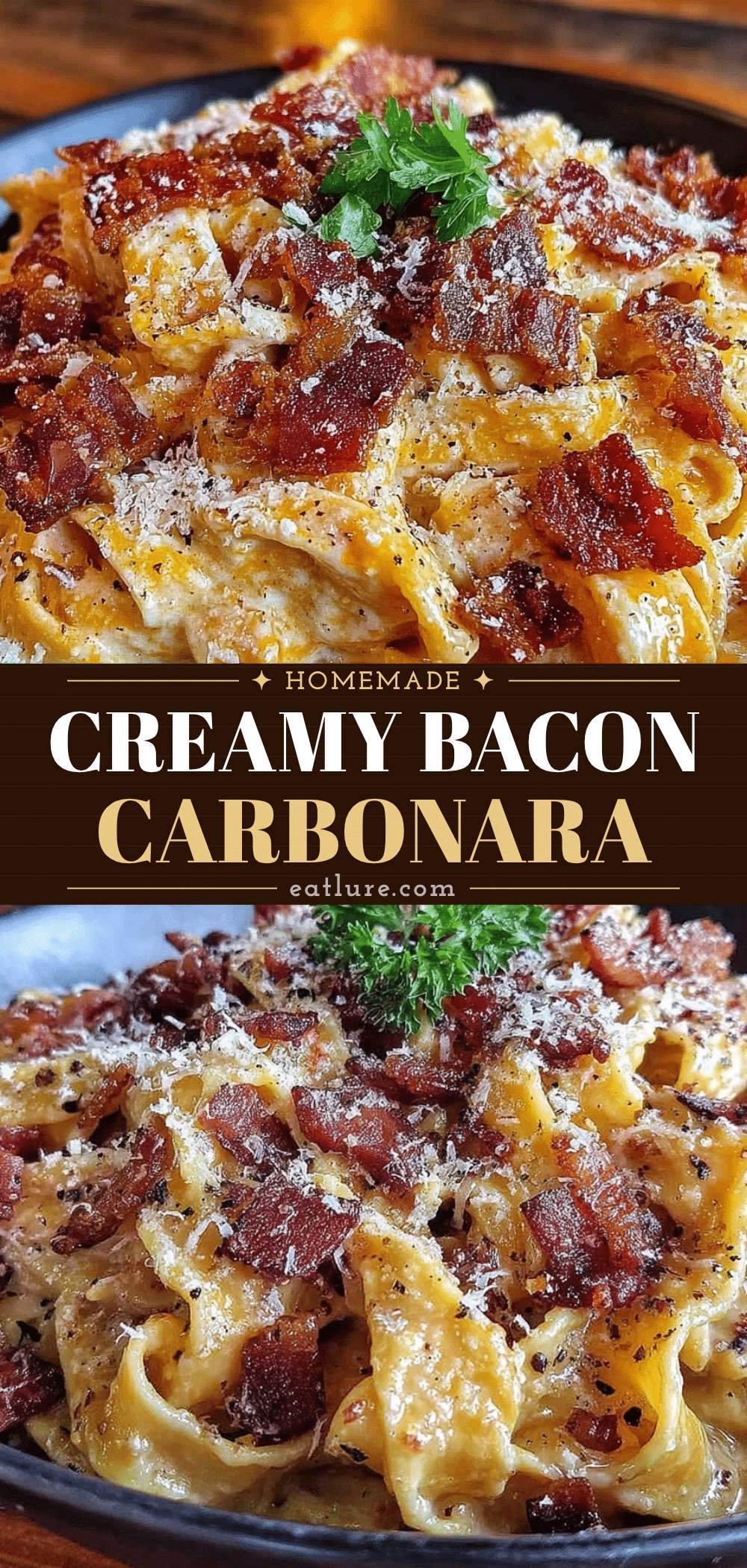

Creamy Bacon Carbonara Pasta: The Sauce Built Properly
- Total Time: 30 minutes
- Yield: 4 servings 1x
Description
A redemption arc for carbonara lovers, this recipe uses proper emulsion techniques with egg yolks, Pecorino Romano, and pasta water to create a silky, restaurant-quality sauce without heavy cream.
Ingredients
- 400g (14 oz) Spaghetti or Rigatoni
- 200g (7 oz) Pancetta or Guanciale, cut into small cubes or strips
- 3 large egg yolks
- 1 large whole egg
- 100g (3.5 oz) Pecorino Romano, finely grated
- 1–2 teaspoons freshly cracked black pepper
- Salted water for boiling pasta
- Reserved starchy pasta water
Instructions
- Bring a large pot of salted water to a rolling boil. Add pasta and cook until al dente. Reserve about 1 cup of pasta water before draining.
- Heat a large skillet over medium heat. Add pancetta or guanciale and cook until fat renders and meat is crispy and golden brown (5-7 minutes). Remove meat with a slotted spoon, leaving rendered fat in the pan.
- In a medium bowl, whisk together egg yolks, whole egg, grated Pecorino Romano, and black pepper until a thick, smooth paste forms.
- Temper the eggs by slowly drizzling a ladle of hot pasta water into the egg mixture while whisking constantly to prevent scrambling.
- Turn off the heat under the skillet. Add drained pasta to the pan with the pork fat. Pour the egg mixture over the pasta and add the crispy pork back in.
- Toss quickly and vigorously. The residual heat will cook the eggs gently into a creamy sauce. Add more pasta water if the sauce is too thick.
- Serve immediately, topped with extra black pepper and cheese shavings.
Notes
Never add the egg mixture to a hot pan; always turn off the heat first to avoid scrambling. Use freshly cracked black pepper for best flavor. Avoid pre-grated cheese as anti-caking agents prevent smooth melting. If the sauce breaks, add a splash of hot pasta water and keep tossing.
- Prep Time: 10 minutes
- Cook Time: 20 minutes
- Category: Main Course
- Cuisine: Italian
Nutrition
- Serving Size: 1 plate
- Calories: 650
- Sugar: 2
- Sodium: 900
- Fat: 35
- Saturated Fat: 14
- Carbohydrates: 60
- Fiber: 3
- Protein: 25
Keywords: carbonara, pasta, bacon, creamy sauce, italian recipe, weeknight dinner, egg emulsion, pecorino romano, guanciale, pancetta