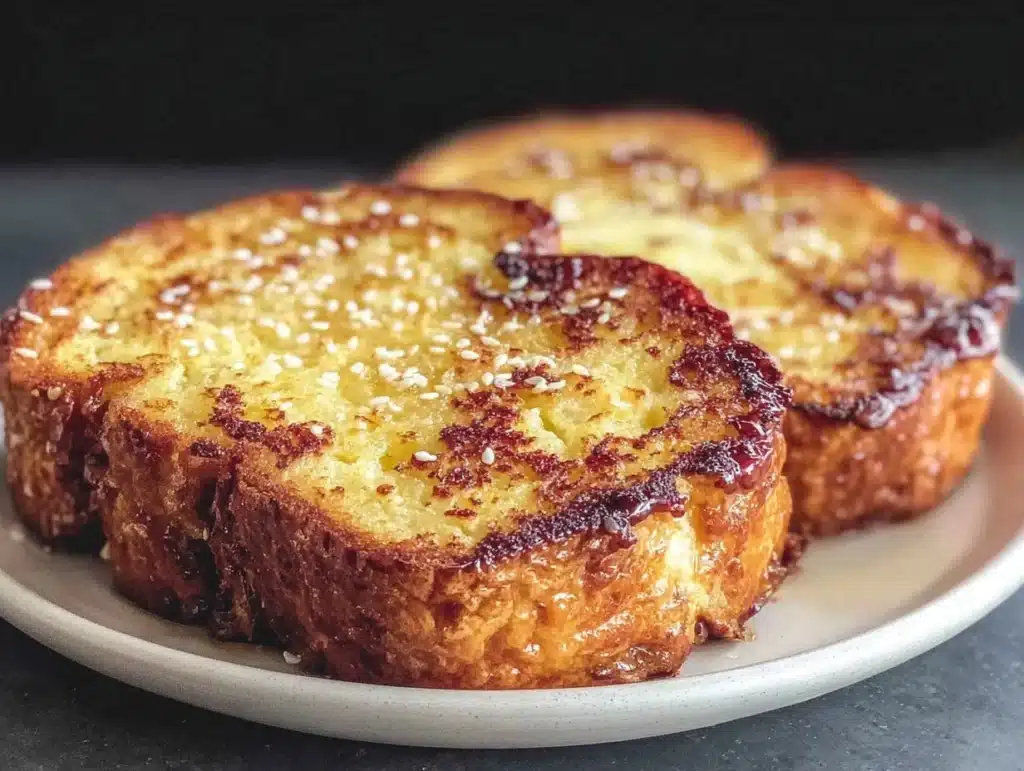
It’s 11:30 PM. The house is quiet. You’re staring into the fridge, hoping a snack will appear by magic. It won’t. But you remember that specific, salty, buttery crunch of Raising Cane’s chicken fingers. You don’t have chicken. You don’t have the drive-thru open. What you do have is bread. And honestly? That’s enough.
I’ve chased this copycat Raising Cane’s bread recipe for years. Not for the chicken, but for the bread itself. It’s the unsung hero of that meal. Thick, soft, dipped in butter, and fried until golden. I first tried to replicate it during a college exam week when I was too broke for takeout but too hungry to cook a full meal. I used whatever white bread was left in my dorm pantry. It was okay. But it wasn’t *it*.
After testing this copycat Raising Cane’s bread recipe over a dozen times, I finally cracked the code. It’s not just about frying bread. It’s about the ratio of butter to oil. It’s about the thickness of the slice. It’s about that precise moment when the crust turns from pale to deep golden brown. This isn’t just a snack. It’s a memory lane trip.
Whether you’re making this for kids’ bedtime snacks or a late-night study session, this copycat Raising Cane’s bread recipe delivers that exact fast-food comfort without the grease hangover. It’s quick, it’s cheap, and it tastes exactly like the real thing. Let’s get cooking.
Why You’ll Love This Copycat Recipe
Let’s be real. Most homemade versions of fast-food bread are dry. They’re tough. They taste like stale toast that got lost in the back of the toaster. This copycat Raising Cane’s bread recipe is different. I developed this after years of working in restaurant kitchens, where we learned that texture is everything. You want soft inside, crispy outside. Period.
Here is why this recipe wins every time:
- Quick & Easy: You can have this ready in under 10 minutes. Seriously. From slice to plate, it’s faster than ordering delivery. Perfect for those sudden cravings that hit at weird hours.
- Simple Ingredients: You don’t need a specialty store. You likely have white bread, butter, and oil in your kitchen right now. No fancy flours or obscure spices. Just pure, simple comfort.
- Perfect for Movie Nights: This is the ultimate companion to a horror movie or a binge-watching session. It’s finger food, it’s messy in the best way, and it keeps you entertained.
- Crowd-Pleaser: I’ve served this to picky eaters and food critics alike. Both groups go back for seconds. The buttery flavor is addictive in a good way.
- Unbelievably Delicious: The texture is next-level. It’s not soggy. It’s not burnt. It’s that perfect golden crunch that shatters when you bite into it, revealing the soft, warm dough inside.
What makes this copycat Raising Cane’s bread recipe stand out is the technique. Most people just melt butter on top. I learned that dipping the bread in a mixture of melted butter and oil creates a barrier that prevents sogginess while ensuring even browning. It’s a small step, but it makes a massive difference. This isn’t just toast. It’s restaurant-quality indulgence at home.
What Ingredients You Will Need
This recipe relies on the quality of your basics. Since there are so few ingredients, each one plays a huge role in the final flavor and texture. You want ingredients that are fresh and reliable. Here is what you need to gather.
- Thick-Cut White Bread: This is non-negotiable. You need bread that is at least half an inch thick. Thinner slices will disintegrate in the oil. I prefer brands like Nature’s Own or generic store-brand thick-cut white bread. If your bread is stale, that’s actually better. Fresh bread is too soft and will absorb too much oil. Let it sit out for an hour to dry slightly.
- Unsalted Butter: Use real butter. No margarine. Margarine has water content that can cause the oil to splatter and the bread to steam instead of fry. I recommend using a high-quality European-style butter for richness, but standard salted butter works if you reduce added salt elsewhere. The butter provides that distinct, rich flavor that defines the original.
- Neutral Oil: You need an oil with a high smoke point. Vegetable oil, canola oil, or peanut oil are perfect choices. Peanut oil adds a subtle nuttiness that pairs well with butter, but it’s optional. Avoid olive oil; the flavor is too strong and it burns at lower temperatures. You’ll need about 1/2 cup for frying.
- Garlic Powder (Optional): While the original Raising Cane’s bread is primarily buttery, some fans love a hint of garlic. If you want to mimic the dip, add a pinch of garlic powder to the melted butter mixture. It adds depth without overpowering the main flavor.
- Salt: A tiny pinch of flaky sea salt on top after frying enhances the sweetness of the bread and balances the richness of the butter. Do not skip this step. It makes the flavor pop.
Keep it simple. The magic is in the execution, not the ingredient list. If you can find day-old bread, use it. It’s the secret weapon for achieving that perfect texture.
Equipment Needed
You don’t need a lot of fancy gear to make this copycat Raising Cane’s bread recipe. A few basic tools will get the job done efficiently.
- Cast Iron Skillet: This is my go-to. Cast iron retains heat incredibly well, which ensures consistent browning. If you don’t have one, a heavy-bottomed stainless steel skillet works too. Avoid non-stick pans if you’re frying in oil, as they can scratch and don’t distribute heat as evenly.
- Deep Fry Thermometer: While you can guess the temperature, a thermometer ensures you hit the sweet spot of 350°F (175°C). This prevents burning or greasy results. If you don’t have one, drop a small piece of bread in; if it sizzles immediately and floats, you’re good.
- Tongs: Essential for flipping the bread safely. Using a fork can tear the bread. Tongs give you a gentle, secure grip.
- Wire Rack & Paper Towels: Never put fried bread directly on a plate. It will get soggy from the trapped steam. A wire rack over a baking sheet allows air to circulate, keeping the crust crispy. Paper towels can be used as a backup, but the rack is superior.
- Small Saucepan: For melting the butter mixture. A small pan gives you more control over the melting process, preventing the butter from burning.
Maintain your cast iron by cleaning it with hot water and a stiff brush, then drying it thoroughly and applying a thin layer of oil. This keeps it seasoned and ready for your next batch of bread.
Preparation Method

Getting this copycat Raising Cane’s bread recipe right is all about timing and temperature. Follow these steps closely for the best results.
Step 1: Prepare the Bread (2 minutes)
Slice your white bread into thick slices, about 1/2 inch thick. If your loaf is already sliced, check the thickness. If it’s too thin, use two slices pressed together. Lay them out on a wire rack or plate. If the bread is very fresh, let it sit for 10-15 minutes to dry out the surface slightly. This helps prevent oil absorption.
Step 2: Melt the Butter Mixture (3 minutes)
In a small saucepan over low heat, combine 1/4 cup of unsalted butter with 1 tablespoon of neutral oil. Heat gently until the butter is completely melted and combined. Do not let it brown or burn. You want a clear, golden liquid. Remove from heat and let it cool slightly. This mixture will be used to brush or dip the bread.
Step 3: Heat the Frying Oil (5 minutes)
Pour 1/2 cup of neutral oil into your cast iron skillet. Place over medium-high heat. Add your thermometer. Wait until the oil reaches 350°F (175°C). This is crucial. If the oil is too cool, the bread will soak it up like a sponge. If it’s too hot, the outside will burn before the inside is warm. Patience here pays off.
Step 4: Coat the Bread (1 minute)
Using a pastry brush or a spoon, lightly coat one side of each bread slice with the butter-oil mixture. You don’t need to soak it. Just a thin, even layer. This helps the bread brown evenly and adds flavor. Flip the bread and coat the other side lightly as well.
Step 5: Fry the Bread (3-4 minutes)
Carefully place the bread slices into the hot oil. Do not overcrowd the pan. Fry in batches if necessary. Cook for 1-2 minutes on the first side until golden brown. Use tongs to flip the bread. Cook the second side for another 1-2 minutes. The bread should be crisp to the touch and deep golden in color. Remove from oil and place immediately on the wire rack.
Step 6: Season and Serve
While the bread is still hot, sprinkle lightly with flaky sea salt. Serve immediately. The contrast between the hot, crispy exterior and the soft interior is best experienced right out of the pan.
Cooking Tips & Techniques
I’ve made my fair share of mistakes frying bread. Some slices were burnt. Others were oily messes. Here are the lessons I learned so you don’t have to.
Temperature Control is Key: The biggest mistake people make is letting the oil get too hot. Keep it around 350°F. If you see smoke, turn off the heat immediately. Let it cool down before adding more bread. Consistent heat means consistent results.
Don’t Skip the Drying Step: If your bread is too fresh, it will fall apart. Letting it air dry for even 10 minutes makes a huge difference. It creates a slightly stiffer surface that can handle the oil without turning to mush.
Use Tongs, Not Forks: Poking bread with a fork creates holes. Oil seeps into those holes, making the bread greasy. Tongs allow you to flip the bread without damaging its structure.
Batch Frying: Never put too much bread in the pan at once. This drops the oil temperature rapidly. Fry in small batches to maintain the heat. It’s faster in the long run than dealing with soggy, undercooked bread.
Listen to the Sizzle: The sound of the bread frying should be a steady, gentle sizzle. If it’s roaring, the oil is too hot. If it’s silent, the oil is too cold. Trust your ears.
Variations & Adaptations
While the classic buttery version is my favorite, this copycat Raising Cane’s bread recipe is versatile. Here are a few ways to tweak it.
Garlic Herb Butter: Mix minced fresh garlic and chopped parsley into the melted butter mixture. This adds a savory kick that pairs well with the salty crust. It’s a great variation for adults who want more flavor.
Cinnamon Sugar Dusting: For a dessert version, skip the salt and fry the bread as usual. After frying, toss the hot bread in a mixture of cinnamon and sugar. It’s like a French toast stick without the egg batter. Kids love this version.
Gluten-Free Option: Use a thick-cut gluten-free white bread. Note that GF bread can be more fragile. Handle it gently and fry at a slightly lower temperature to ensure it cooks through without burning. You may need to toast it lightly before frying to give it more structure.
Spicy Kick: Add a pinch of cayenne pepper or red pepper flakes to the melted butter. This adds a subtle heat that contrasts nicely with the cool dipping sauce if you serve it with chicken.
My Personal Favorite: I often add a tiny bit of grated parmesan to the butter mixture. It adds a salty, umami depth that makes the bread taste more gourmet. It’s a small change, but it elevates the flavor profile significantly.
Serving & Storage Suggestions
How you serve this copycat Raising Cane’s bread recipe matters. Presentation is part of the experience.
Serving Temperature: Serve immediately. Warm bread is best. Letting it sit for more than 5 minutes will cause the crust to soften. If you are hosting a party, fry in small batches to keep them hot.
Pairings: This bread is perfect alongside chicken fingers, but it also works well with tomato soup or chili. The buttery flavor complements acidic or savory dishes beautifully. For a complete meal, serve with a side of ranch or Cane’s sauce.
Storage: This bread is best eaten fresh. However, if you have leftovers, store them in an airtight container at room temperature for up to 2 hours. They will lose their crispness over time. Do not refrigerate, as the starch will retrograde and make the bread stale.
Reheating: If you must reheat, use an oven or toaster oven at 350°F for 3-4 minutes. This will restore some crispness. Avoid the microwave, as it will make the bread chewy and tough.
Flavor Development: The flavors are best on day one. The butter and oil meld together perfectly while hot. Day-old bread has a different texture, so it’s not recommended for storage.
Nutritional Information & Benefits
Let’s talk about what’s in this copycat Raising Cane’s bread recipe. It’s indulgent, but understanding the nutrition helps you enjoy it mindfully.
Each slice of fried bread contains approximately 150-180 calories, depending on the thickness of the bread and the amount of oil absorbed. The primary sources of calories are carbohydrates from the bread and fats from the butter and oil.
Health Benefits: While this isn’t a health food, white bread provides quick energy. The butter contains vitamins A, D, E, and K. However, it is high in saturated fat. Enjoy this as an occasional treat rather than a daily staple.
Dietary Considerations: This recipe is not gluten-free or vegan. It contains wheat and dairy. For those with allergies, stick to the variations mentioned earlier. It is also high in sodium due to the salt and potential sodium in the bread.
Personal Wellness Perspective: I view this as a comfort food, not a health food. It’s about satisfaction. Eating it in moderation allows you to enjoy the flavor without guilt. Pair it with a vegetable-rich meal to balance out the meal.
Conclusion
Making this copycat Raising Cane’s bread recipe at home is a game-changer. It captures that specific fast-food magic without the drive-thru wait. The combination of thick bread, buttery coating, and crispy frying technique creates a snack that is truly unforgettable.
I encourage you to try this recipe and make it your own. Add garlic, add cinnamon, or keep it classic. The base recipe is solid, but your preferences matter. Share your variations in the comments below. I love seeing how others adapt this recipe.
This recipe is worth the ten extra minutes of effort. It’s restaurant-level payoff for a fraction of the cost. So next time that craving hits, don’t order out. Fry up some bread. Your taste buds will thank you.
Don’t forget to rate this recipe and leave a comment. Your feedback helps me improve and inspires others to try it. Happy cooking!
Frequently Asked Questions
Can I use whole wheat bread for this recipe?
Yes, you can, but the texture will be denser. Whole wheat bread absorbs more oil, so you may need to fry for a shorter time to prevent burning. The flavor will be nuttier and less sweet than white bread.
How do I prevent the bread from getting soggy?
The key is to fry in batches and use a wire rack for draining. Do not stack the bread on a plate. Also, ensure your oil is at the correct temperature. Too low, and the bread soaks up oil; too high, and it burns.
Can I freeze the fried bread?
It’s not recommended. Fried bread loses its crispness when frozen and reheated. It’s best eaten fresh. If you must freeze, freeze the unbreaded slices after buttering, but the texture will still suffer upon frying.
What is the best oil to use for frying?
Neutral oils with high smoke points are best. Vegetable, canola, or peanut oil work perfectly. Avoid olive oil or butter alone, as they burn too easily.
Why is my bread burning but still cold inside?
This usually means the oil is too hot. Lower the temperature to 350°F. Also, ensure your bread slices are not too thick. If they are, fry at a lower temperature for a longer time to cook the center without burning the outside.
Pin This Recipe!
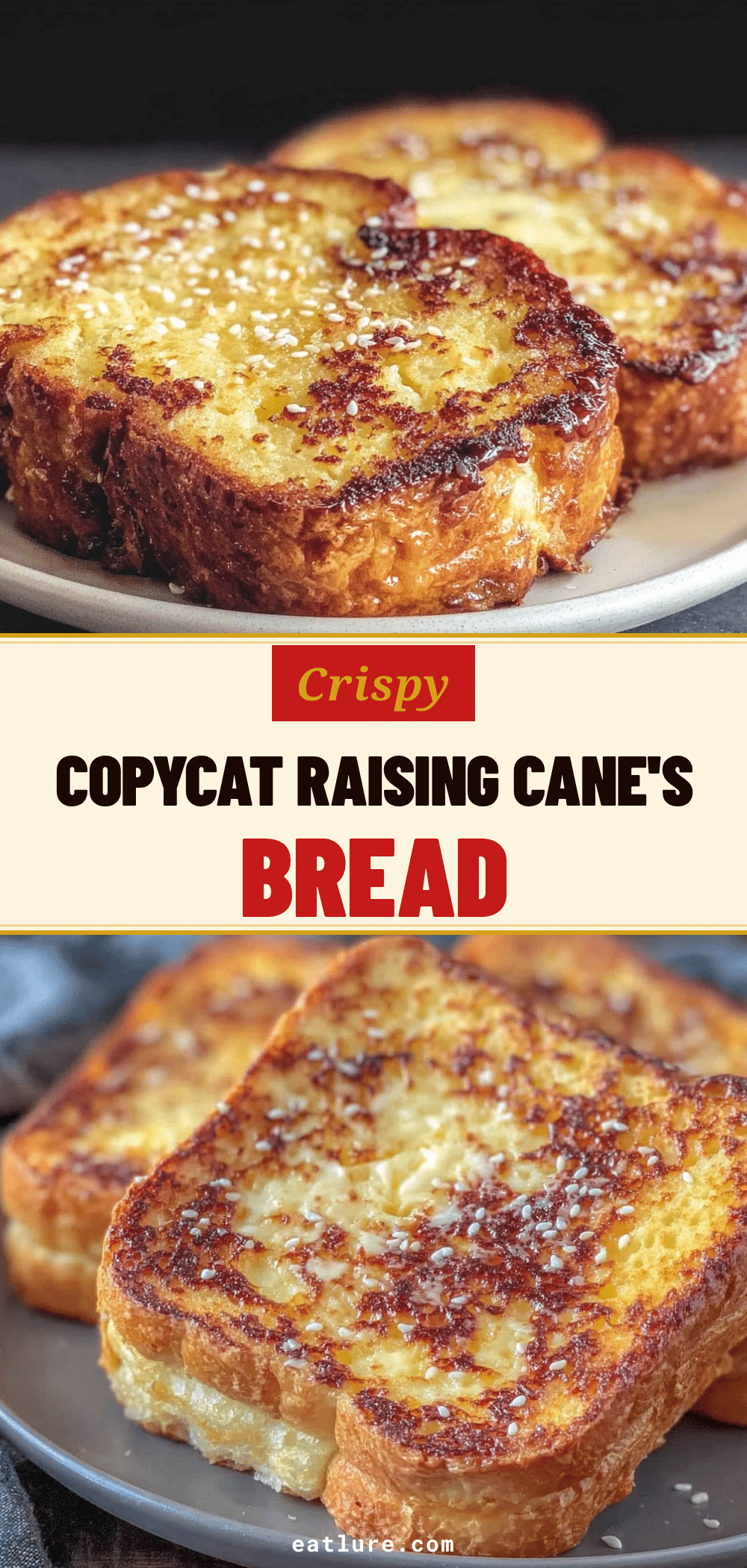

Copycat Raising Canes Bread: Best 10 Min Crispy Recipe
- Total Time: 10 minutes
- Yield: 4 servings 1x
Description
A quick and easy copycat recipe for Raising Cane’s famous bread, featuring thick-cut white bread dipped in a butter-oil mixture and fried until golden and crispy.
Ingredients
- Thick-cut white bread (at least 1/2 inch thick)
- 1/4 cup unsalted butter
- 1 tablespoon neutral oil (for butter mixture)
- 1/2 cup neutral oil (for frying)
- Flaky sea salt (for finishing)
- Garlic powder (optional)
Instructions
- Slice the white bread into thick slices (1/2 inch). If fresh, let sit for 10-15 minutes to dry slightly.
- In a small saucepan over low heat, melt 1/4 cup butter with 1 tablespoon neutral oil. Do not brown. Remove from heat.
- Pour 1/2 cup neutral oil into a cast iron skillet and heat over medium-high heat to 350°F (175°C).
- Lightly coat both sides of each bread slice with the melted butter-oil mixture using a pastry brush or spoon.
- Carefully place bread slices into the hot oil. Fry for 1-2 minutes per side until deep golden brown and crisp.
- Remove bread from oil and place immediately on a wire rack to drain.
- Sprinkle lightly with flaky sea salt while hot. Serve immediately.
Notes
Use day-old or slightly stale bread to prevent oil absorption. Maintain oil temperature at 350°F to ensure even cooking. Do not overcrowd the pan; fry in batches. Serve immediately for best texture.
- Prep Time: 2 minutes
- Cook Time: 8 minutes
- Category: Snack
- Cuisine: American
Nutrition
- Serving Size: 1 slice
- Calories: 165
- Sugar: 2
- Sodium: 180
- Fat: 10
- Saturated Fat: 5
- Carbohydrates: 15
- Fiber: 1
- Protein: 3
Keywords: Raising Cane's bread, copycat recipe, fried bread, crispy bread, buttery bread, fast food copycat, quick snack